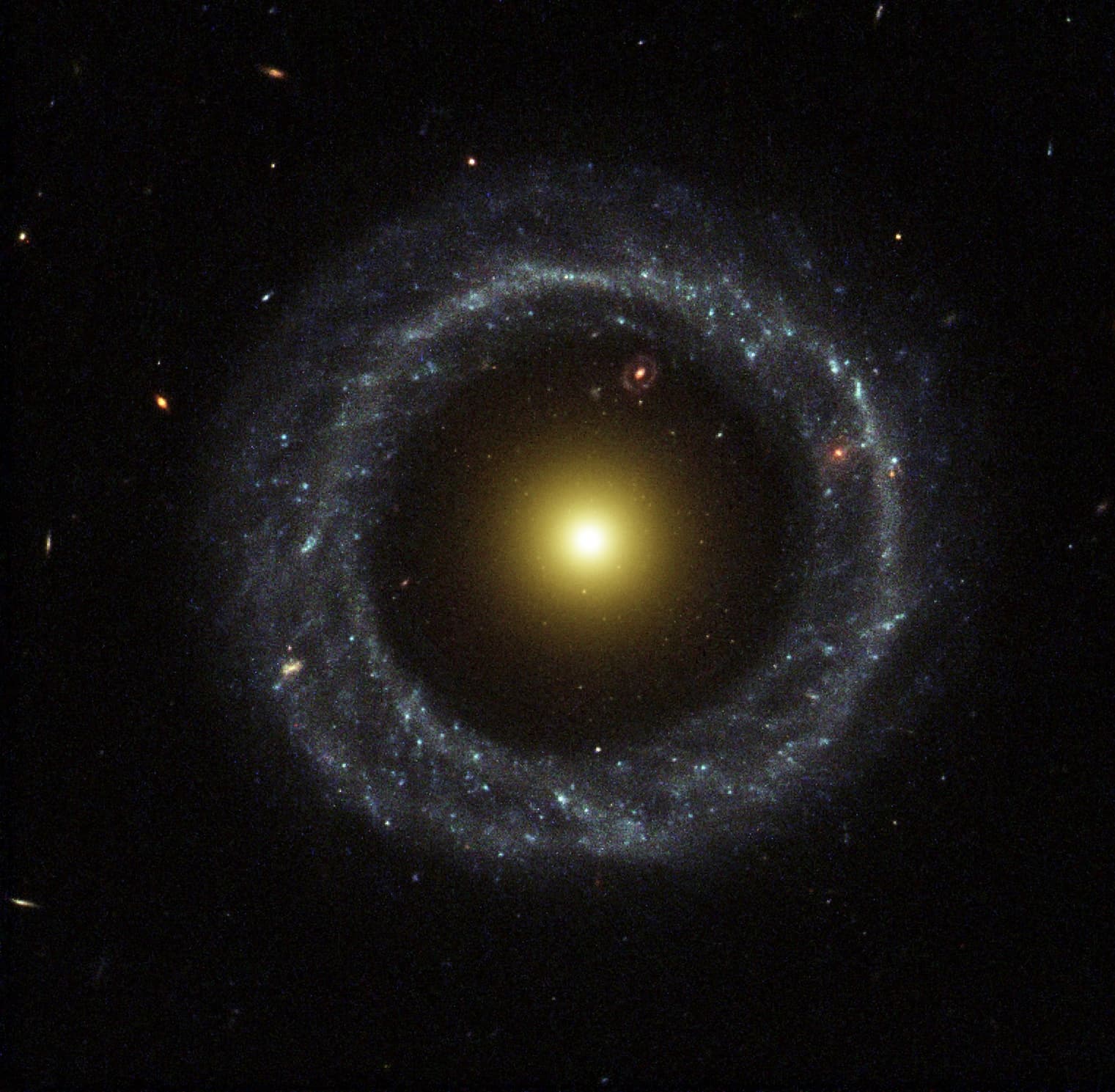
I’ve been exploring an alternative formation scenario for Hoag’s Object, the enigmatic ring galaxy lacking an obvious external intruder. Below is a proposed mechanism that explains its structure without invoking a traditional collision-based origin.
Core Hypothesis:
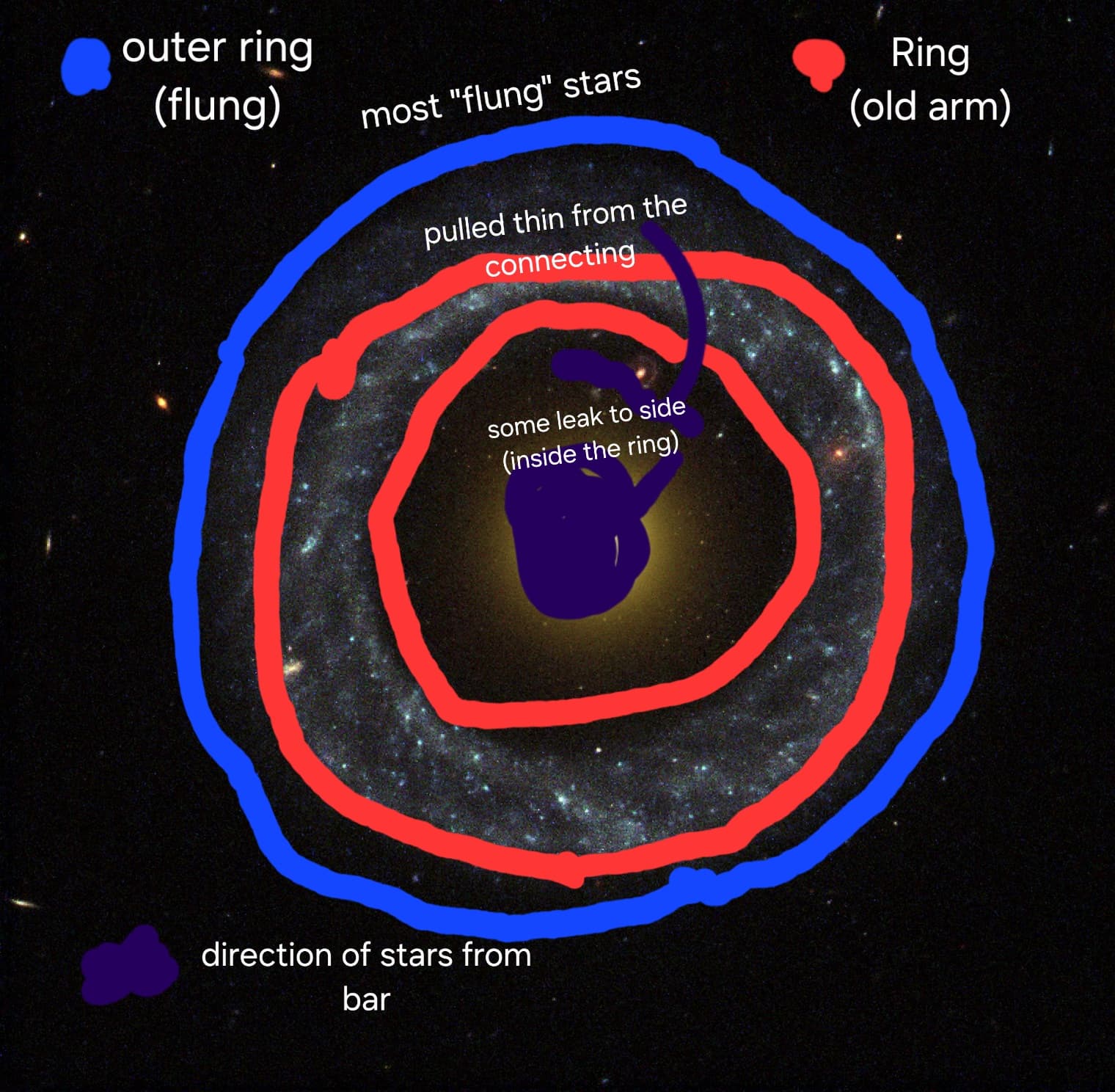
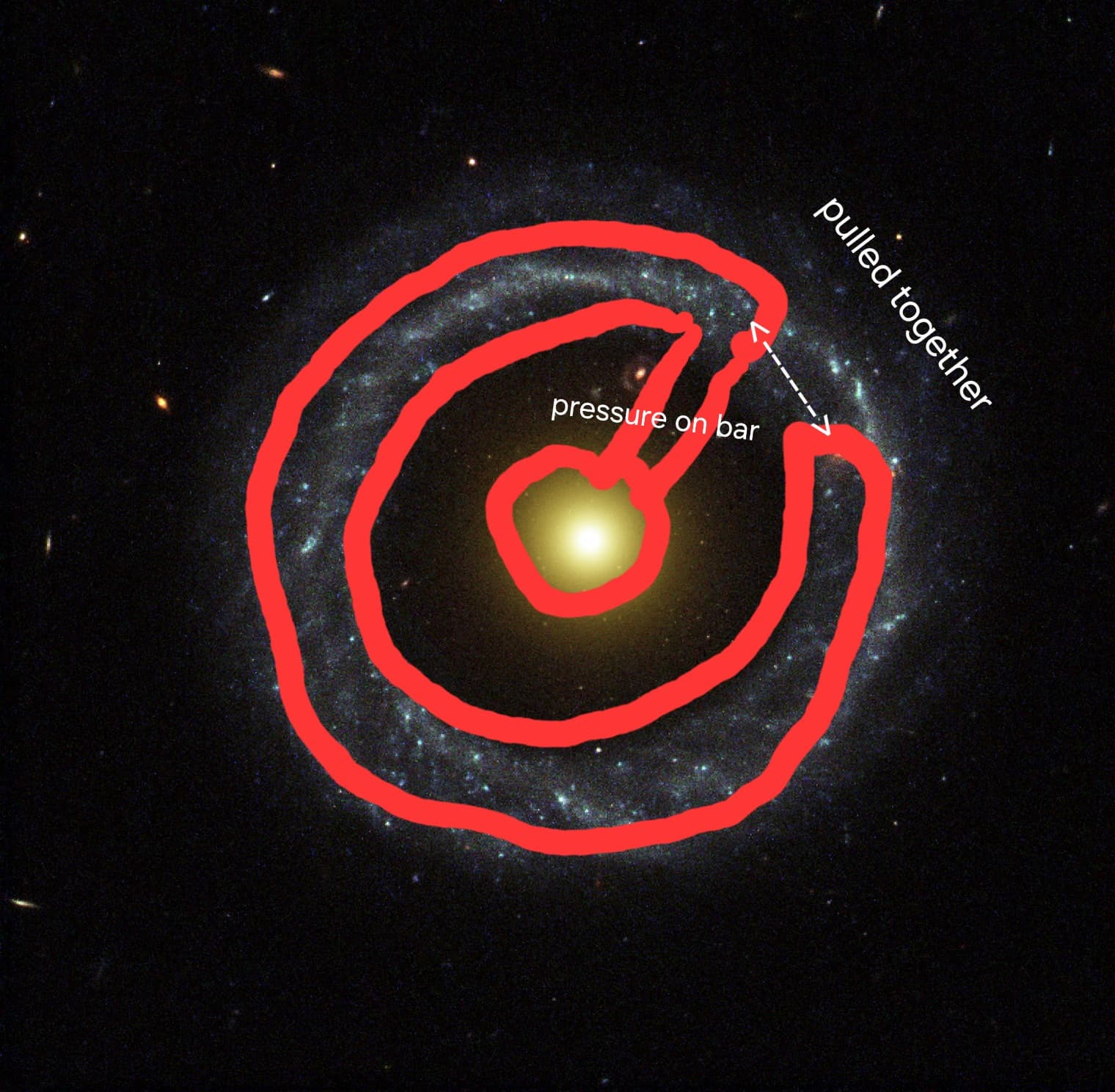
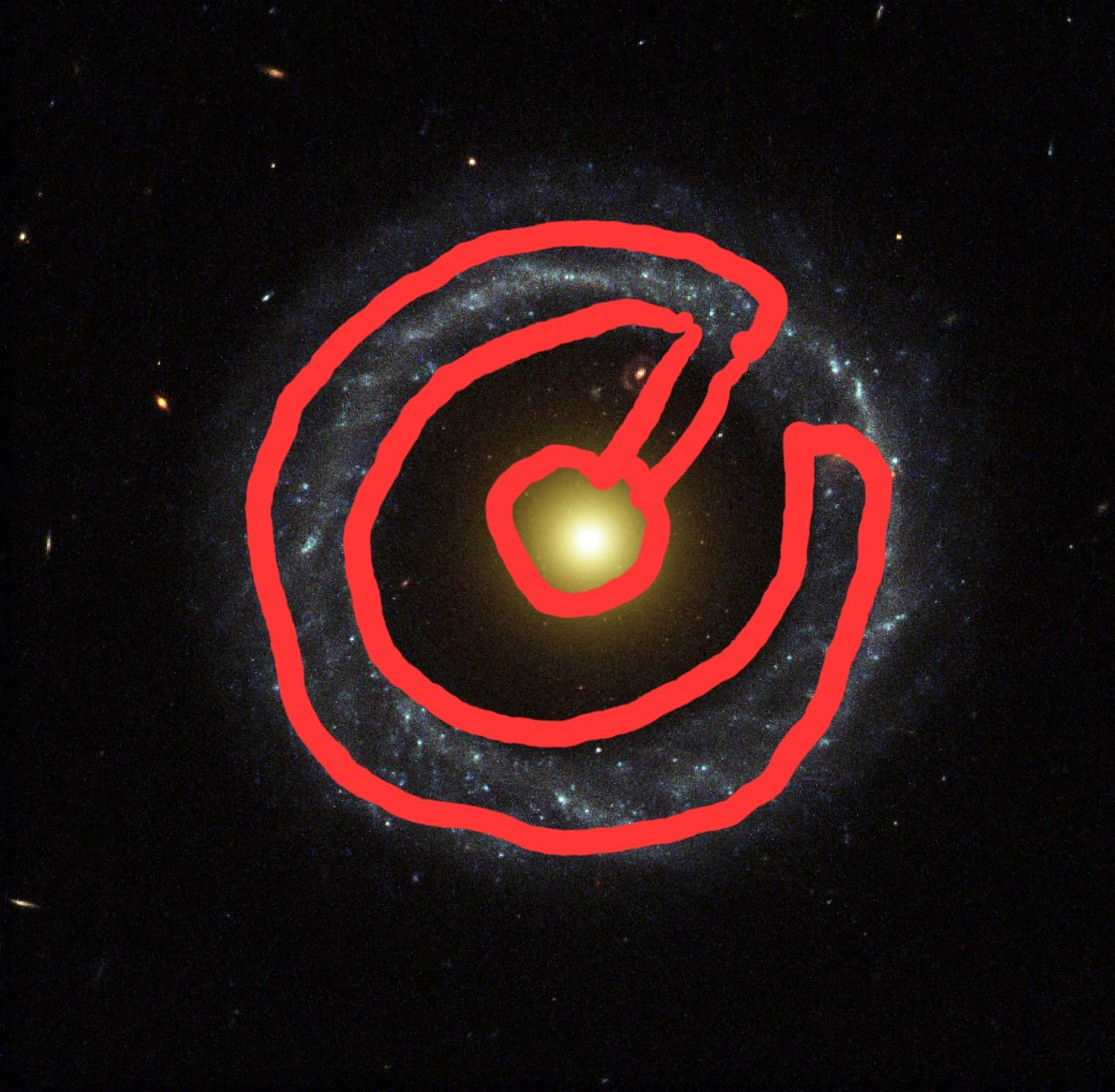
Hoag’s Object may have formed through internal gravitational disruption of a single-arm barred spiral galaxy, wherein a tidal interaction between the tip and base of the dominant arm caused the central bridge (bar) to fail catastrophically. This self-induced disruption ejected a subset of stars from the bridge and minimally from the arm, while preserving the structural integrity of the arm itself, which subsequently wrapped into the observed ring.
Mechanism and Rationale:
Pre-Interaction Galaxy:
A single-arm barred spiral galaxy with a near-360° arm and a dense central bridge (bar). The arm is treated as a continuous, gravitationally bound structure rather than a transient density wave.
Tidal Interaction:
The tip of the arm passes within a critical distance of the arm’s base (near the center), inducing extreme tensile stress along the bridge due to gravitational focusing.
Bridge Disruption:
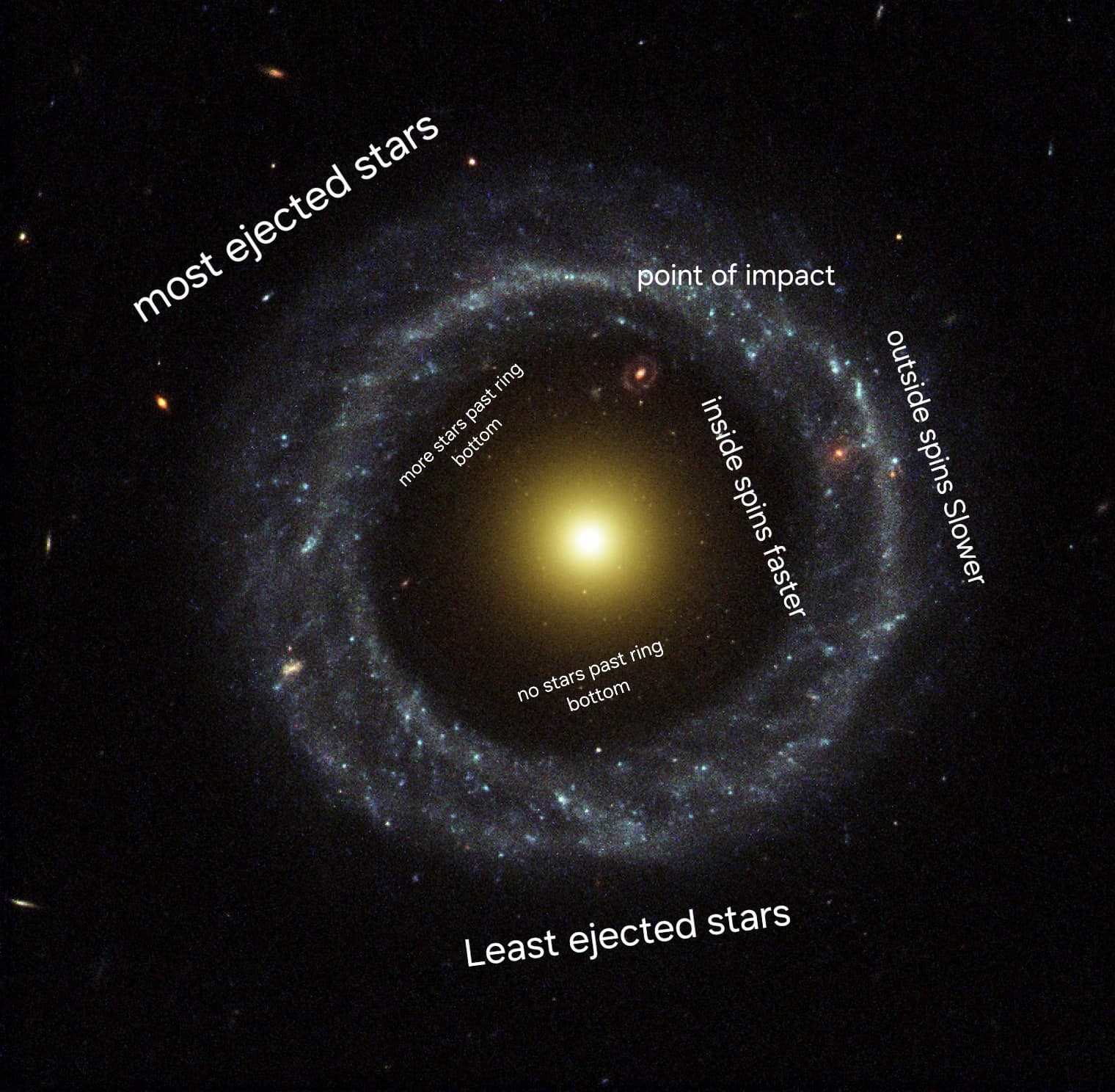
The bridge snaps at its weakest point (e.g., 12 o’clock position), ejecting a significant fraction of bridge stars outward. The arm remains largely intact, with only a minimal subset of stars ejected.
Ring Formation:
The intact arm wraps around the galaxy due to angular momentum conservation, forming the observed ring. The 12 o’clock region exhibits localized thinning due to stretching during the disruption.
Central Star Formation:
The inward-bound fragment of the bridge funnels gas and stars into the galactic center, triggering compression-induced star formation. This explains the younger stellar population observed in the core.
Faint Ejected Trail:
The ejected stars form a faint, patchy trail beyond the ring, concentrated at 12 o’clock, consistent with the recency of the event.