Kind of puts a perspective on things.
1 Like
The deepest i have gone is the quasar 3c 273, thats a solid 2 billion light years
1 Like
Uh, yeah. The Hubblesky.
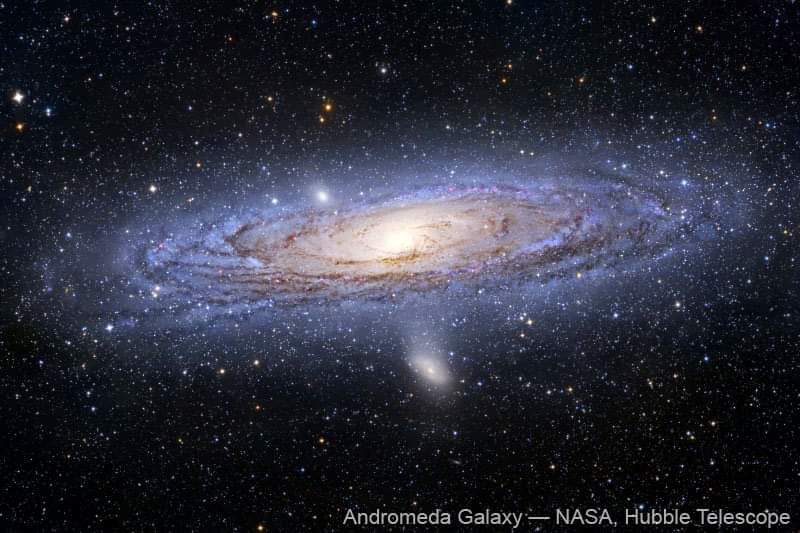
When I learned how they take a B&W image, then dream in all the color and details, well, it just popped my bubble.
In the 1990’s we called it “Photoshopped”. Now… faked is just accepted.
That’s why I prefer a OSC (one shot color) camera. And have gotten away from the Skittles colors.
Anyway, that is where I’m at these days. 
1 Like
It all depends on your understanding of the physiology of the human eye. Very few DSOs display color to the eyepiece viewer. Galaxies have too low of a surface brighness to register in the cone cell color receptors in your eyes.
The astronomers at the Space Telescope Science Institute do not just arbitrarily add colors to make images pretty. Colors are assigned according to temperature and or frequencies.
Amatuer astrophotographers, in the day of film, used color slide and print film that showed a lot of red in nebulas like M42 in Orion. But in honesty, to the human eye in an amateur telecope, it is all in grayscale colors. To see any color in a telescope with your mark 1 eyeball, you need LOTS of light gathering aperture. For example, I know for a fact that M42 in Orion is GREEN in color when observing with an eyepiece at the 60 inch telecope at Mt. Wilson Observatory.
1 Like